South Sulawesi
Province in southern Sulawesi, gateway to the spice trade.

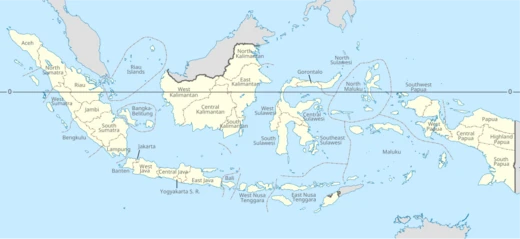
South Sulawesi is a province in the southern peninsula of Sulawesi, Indonesia, including the Selayar Islands archipelago. It is bordered by Central Sulawesi and West Sulawesi to the north, the Gulf of Bone and Southeast Sulawesi to the east, Makassar Strait to the west, and Flores Sea to the south. The 2010 census estimated the population as 8,032,551, making it the most populous province on the island (46% of the population of Sulawesi is in South Sulawesi) and the sixth most populous province in Indonesia. At the 2020 Census, this had risen to 9,073,509, and the official estimate as of mid-2025 was 9,563,130. The capital and largest city is Makassar, which had nearly 1.5m inhabitants in 2025, while the Makassar metropolitan area had more than twice that population. The main ethnic groups are the Buginese, Makassarese and Torajan. The economy is based on agriculture, fishing, and the mining of gold, magnesium, iron, and other metals. The pinisi, a traditional Indonesian two-masted sailing ship, is still used widely by the Buginese and Makassarese, mostly for inter-insular transportation, cargo, and fishing purposes within the Indonesian archipelago.
- Capital
- Makassar
- Population (2025 estimate)
- 9,563,130
- Area
- 45,323.98 square kilometres
- Major ethnic groups
- Buginese, Makassarese, Torajan
- Key historical period
- Spice trade era (15th–19th centuries)
- Notable historical kingdoms
- Kingdom of Makassar, Bugis kingdom Bone
Verified Timeline
Lore & Background
During the golden era of the spice trade, from the 15th to 19th centuries, South Sulawesi served as the gateway to the Maluku Islands. There were several small kingdoms, including two prominent ones, the kingdom of Makassar and the Bugis kingdom Bone. The Dutch East India Company (VOC) began operating in the region in the 17th century. VOC later allied with the Bugis prince, Arung Palakka, and they defeated the kingdom of Makassar. The king of Makassar, Sultan Hasanuddin was forced to sign a treaty that greatly reduced the power of Bungaya Gowa. Sulawesi was first inhabited by humans approximately 30,000 years ago. The archaeological remains of the earliest inhabitants were discovered in caves near limestone hills around Maros, about 30 km northeast of Makassar. Handprint paintings, estimated to be around 35,000 to 40,000 years old, have been found in the Pettakere cave, located 12 kilometres from the town of Maros and 30 kilometres from Makassar. The increase in commerce due to the rise of external demand for South Sulawesi rice encouraged major agricultural expansion and political centralization in the early 14th century. Swidden agriculture was increasingly replaced with intensive wet rice cultivation, leading to a rise in population density. These changes accompanied the rise of new interior agricultural policies, such as the Bugis chiefdoms of Boné and Wajoq, as well as the Makassar polity of Gowa. By the early 16th century, Boné had assumed a paramount position in the eastern part of the peninsula, while the Makassar twin kingdoms of Gowa and Talloq started to expand their influence throughout the western part. Their competition for hegemony over South Sulawesi caused Gowa-Talloq and Boné to clash in the 1560s. In 1582, Boné, Soppéng, and Wajoq signed a mutual defense pact known as the Treaty of Timurung. The alliance also referred to as the Tellumpocco sought to stop Gowa's expansionism. Gowa's campaigns against the alliance in 1582, 1585, and 1588 were all successfully repulsed, with another one in 1590 abandoned following the death of Gowa's ruler. By the early 17th century, however, Gowa and Talloq had become the dominant powers in South Sulawesi as they supported international commerce and embraced Islam. Gowa waged successful campaigns against the Bugis kingdoms, defeating Soppéng in 1609, Wajoq in 1610, and Boné in 1611. The VOC saw the Kingdom of Gowa as an obstacle to its desire to control the spice trade. After a year-long battle, they defeated the kingdom of Gowa. Furthermore, Palakka became ruler in South Sulawesi. A Bugis queen later emerged to lead the resistance against the Dutch, who were busy dealing with the Napoleonic Wars in Europe, but after the end of the Napoleonic Wars, the Dutch returned to South Sulawesi and eradicated the queen's rebellion. However resistance of the Bugis people against colonial rule continued until 1905. In 1905, the Dutch also managed to conquer Tana Toraja. On June 16, 2022, a tornado struck the province, damaging 63 homes. One man died of a stress-induced medical issue during the tornado, but was not a direct tornado-related fatality.
Reader's Guide
South Sulawesi's significance lies in its role as a historical hub for the spice trade, connecting the Maluku Islands to the wider world from the 15th to 19th centuries. The region was shaped by the rivalry between the Makassar kingdom of Gowa-Talloq and the Bugis kingdoms, culminating in the Treaty of Timurung (1582) and later Dutch intervention. The Dutch East India Company allied with Bugis prince Arung Palakka to defeat Gowa, forcing Sultan Hasanuddin to sign a treaty that reduced Gowa's power. Resistance against colonial rule continued until 1905. Today, South Sulawesi remains economically important through agriculture, fishing, and mining, and its traditional pinisi sailing ships are still used for inter-island transport. The province's diverse ethnic groups—Buginese, Makassarese, and Torajan—contribute to its cultural richness. The province covers a land area of 45,323.98 square kilometres and includes 369 offshore islands. The province comprises three of Indonesia's 84 national electoral districts to elect members to the People's Representative Council. The South Sulawesi I Electoral District consists of 5 regencies (Bantaeng, Jeneponto, Takalar, Gowa, and Selayar Islands), together with the city of Makassar, and elects 8 members. The South Sulawesi II Electoral District consists of 8 regencies (Bulukumba, Sinjai, Maros, Pangkajene and Islands, Barru, Bone, Soppeng, and Wajo), together with the city of Parepare, and elects 9 members. The South Sulawesi III Electoral District consists of 8 regencies (Sidenrang Rappang, Pinrang, Enrekang, Luwu, Tana Toraja, North Toraja, North Luwu, and East Luwu), together with the city of Palopo, and elects 7 members.
Did You Know?
- Handprint paintings estimated to be 35,000 to 40,000 years old have been found in Pettakere cave, 12 km from Maros.
- The Treaty of Timurung in 1582 was a mutual defense pact between Boné, Soppéng, and Wajoq, also called the Tellumpocco ('Three Powers').
- The pinisi, a traditional two-masted sailing ship, is still used widely by the Buginese and Makassarese for inter-insular transportation, cargo, and fishing.
- On June 16, 2022, a tornado struck the province, damaging 63 homes; one man died of a stress-induced medical issue during the tornado.
- The province includes 369 offshore islands, with 133 in Pangkajene and Islands Regency alone.
Frequently Asked Questions
Who is South Sulawesi?
South Sulawesi is a province occupying the southern peninsula of Sulawesi, Indonesia, and also includes the Selayar Islands archipelago. Its capital and largest city is Makassar, and it is the most populous province on the island with over 9.5 million residents as of 2025.
What is South Sulawesi's role or 'power' in the canon?
Its defining function was acting as the maritime gateway between the mainland and the Maluku Islands during the spice trade era (15th–19th centuries). Fleets heading for nutmeg and clove territories historically departed from its harbors, making it the logistical hub of that trade network.
How does South Sulawesi's story end?
Its arc as a dominant maritime and commercial power closes with the waning of the spice trade in the 19th century. The province persists today as a major Indonesian administrative region, but the era of its kingdom-led naval supremacy is firmly in the past.
Why is South Sulawesi important to the overall series?
It was home to two of the region's most influential kingdoms—Makassar and Bone—which shaped political and military dynamics across eastern Indonesia for centuries. Its geographic position as the gateway to the Maluku spice islands made it a critical node in pre-modern global commerce.
Who are South Sulawesi's key factions or allies?
The three major ethnic groups tied to the province are the Buginese, Makassarese, and Torajan, each historically linked to distinct polities. The Kingdom of Makassar and the Bugis kingdom of Bone stand out as the two most prominent historical powers in its narrative.
More in Provinces Of Indonesia 1-24
Related in Provinces Of Indonesia
Links follow this subject's own source article.
Elsewhere in the Provinces Of Indonesia universe
Spotted an error? Know more?
This is a living reference — every entry is fact-audited, and reader corrections feed straight into our audit queue. Suggest an edit · See this site's audit record