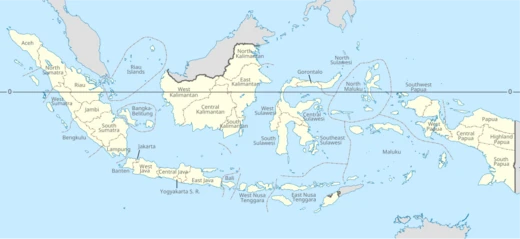
East Kalimantan
Indonesian province hosting the world's oldest figurative art and new capital.

via Wikipedia: East Kalimantan · see source
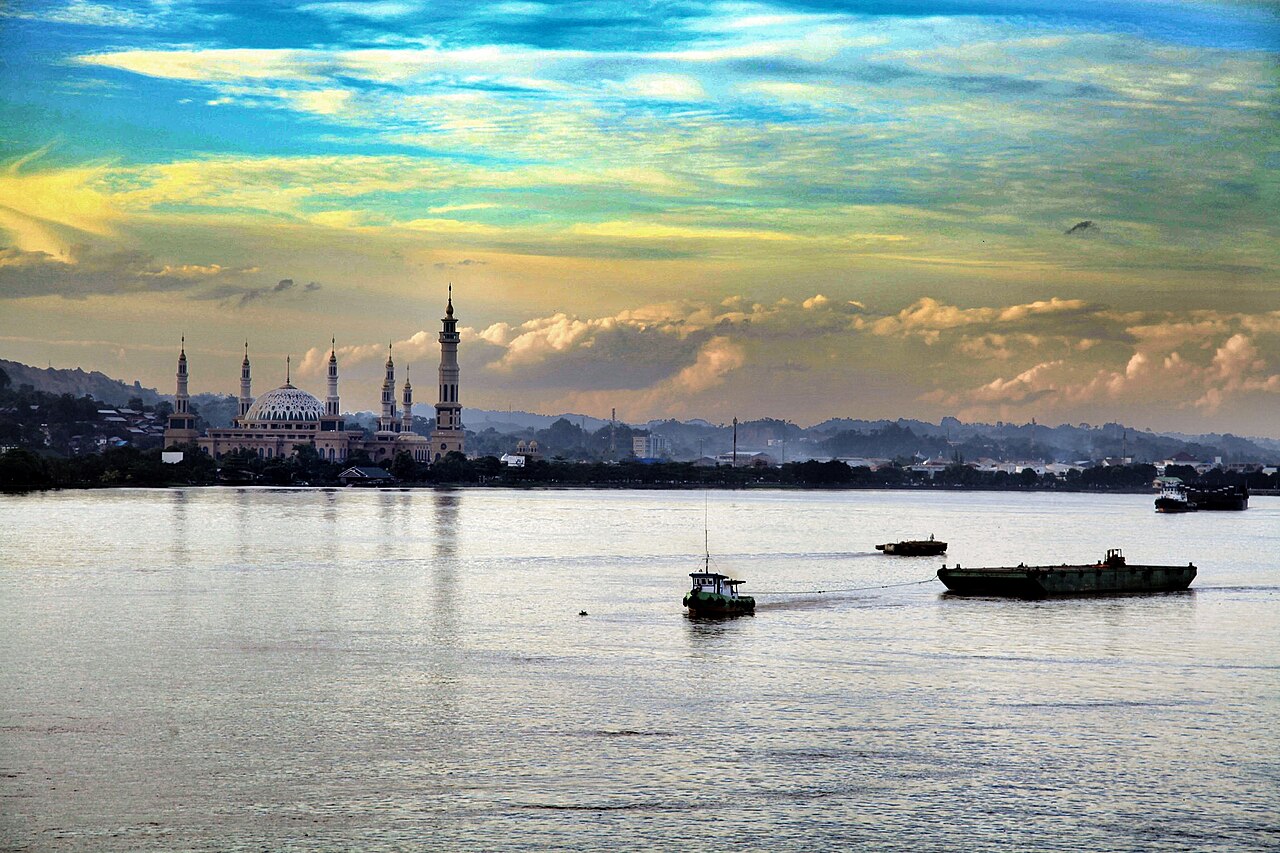
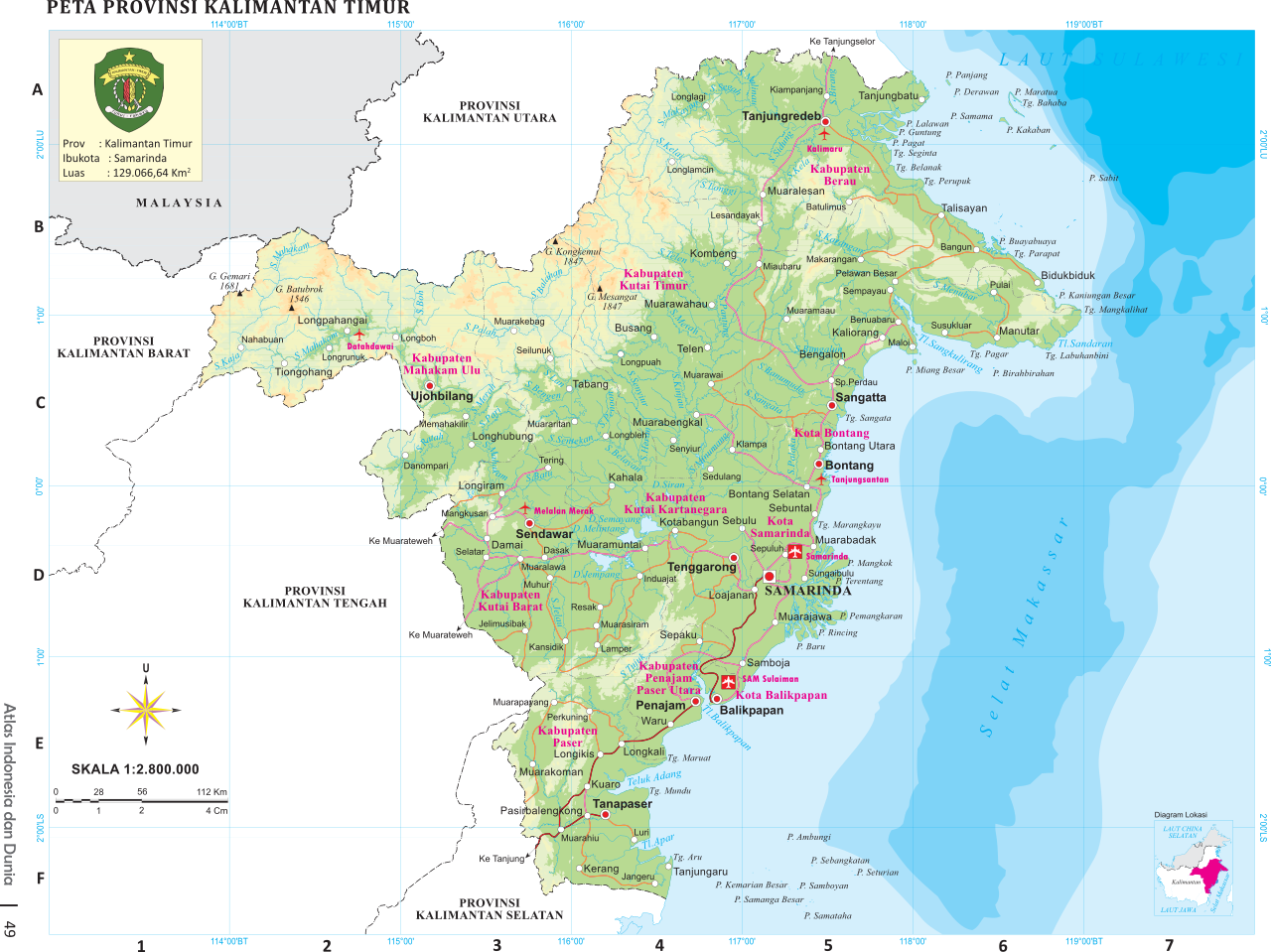
East Kalimantan is a province of Indonesia comprising the eastern portion of Borneo. Its capital is Samarinda, the most populous city on the entire island of Borneo. The province had a population of about 3.03 million at the 2010 census (within the present boundary), and 3.766 million at the 2020 census; the official estimate in mid-2025 was 4,267,600. Its total area is 127,346.92 square kilometres, making it the third least densely populated province in Kalimantan. Since 11 January 2013, East Kalimantan has been divided into seven regencies and three cities. The proposed capital city of Indonesia, Nusantara, is currently constructed entirely within the province.
- Capital
- Samarinda
- Population (mid-2025 estimate)
- 4,267,600
- Area
- 127,346.92 sq km
- Established
- Law No. 25 of 1956
- Number of Regencies and Cities
- 7 regencies and 3 cities (since 11 January 2013)
Verified Timeline
Lore & Background
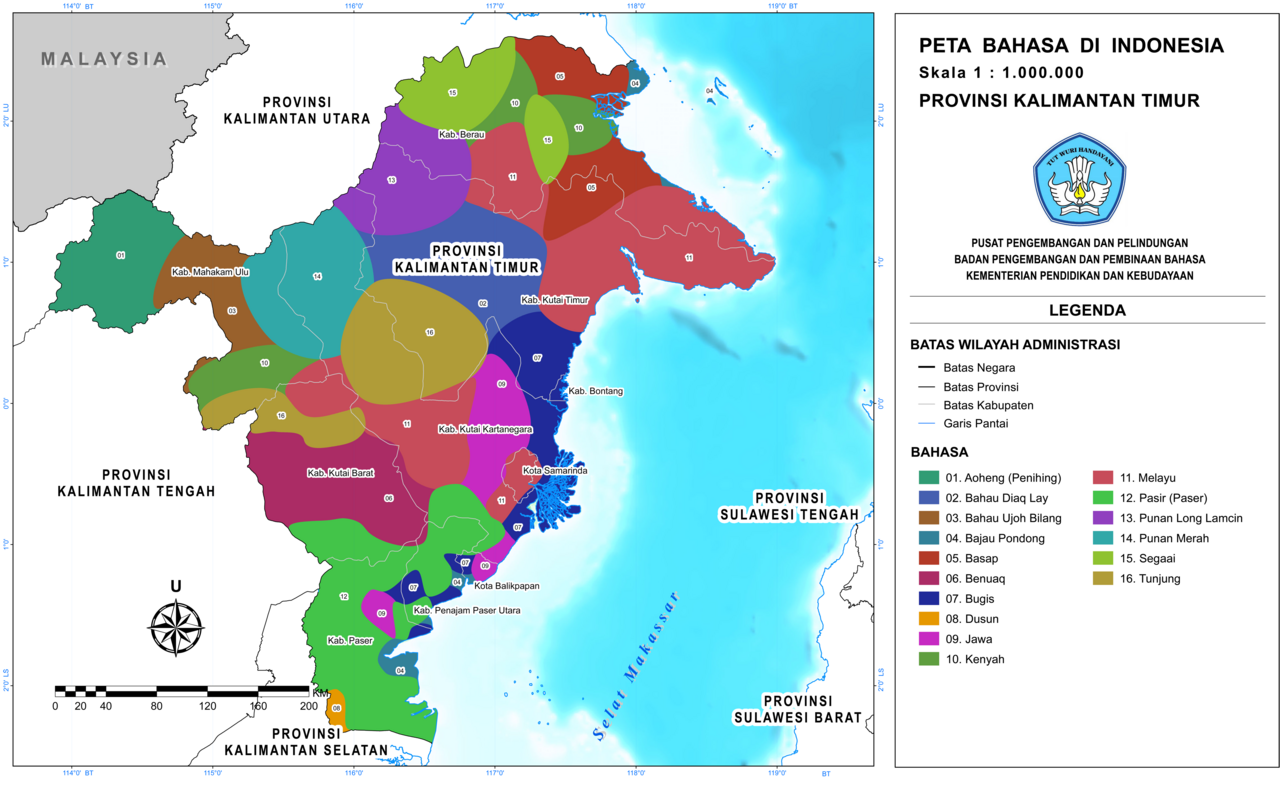
East Kalimantan was once mostly covered by tropical rainforest. In prehistoric times, a limestone cave called Lubang Jeriji Saléh located in the Sangkulirang-Mangkalihat Karst in the district of Bengalon, East Kutai, was found to contain one of the oldest figurative art in the world. The cave paintings were first spotted in 1994 by the French explorer Luc-Henri Fage and the French archaeologist Jean-Michel Chazine, from Kalimanthrope. In 2018, a team of scientists investigating the cave, led by Maxime Aubert from Griffith University and Pindi Setiawan from the Bandung Institute of Technology, published a report in the journal Nature identifying the paintings as the world's oldest known figurative art. The team used dating techniques on the calcium carbonate (limestone) deposits close to them. East Kalimantan has been home to several kingdoms, such as the first and oldest Hindu kingdom of Indonesia, the Kingdom of Kutai Martadipura founded in the 4th century CE. It was succeeded by the Sultanate of Kutai ing Martadipura in the 14th century. Other kingdoms were also located in East Kalimantan, such as the Sultanate of Pasir. In accordance with treaties, on 1 January 1817, Sultan Sulaiman of Banjar handed East Kalimantan, Central Kalimantan, part of West and South Kalimantan (including Banjarmasin) over to the Dutch East Indies. On 4 May 1826, Sultan Adam al-wathiq Billah of Banjar reaffirmed the handover. East Kalimantan with its then administrative area was established based on Law No. 25 of 1956, originally only consisted of three regency-level special regions: Berau, Bulongan, and Kutai; the first governor was APT Pranoto. Its former northernmost region was split off on 25 October 2012 and is now the separate province of North Kalimantan, formally inaugurated on 15 April 2013. The province will host the future capital city of Indonesia, Nusantara, built on parts of Penajam North Paser and Kutai Kartanegara Regency. The new national capital was formally inaugurated in August 2024.
Reader's Guide
East Kalimantan holds significant importance in Indonesian history and prehistory. It contains the world's oldest known figurative art in the Lubang Jeriji Saléh cave, dating back to prehistoric times, which provides crucial insights into early human artistic expression. The province was the site of the first Hindu kingdom in Indonesia, Kutai Martadipura, established in the 4th century CE, marking the beginning of recorded history in the archipelago. Its strategic location on Borneo made it a contested region among various sultanates and colonial powers, including the Sultanate of Makassar and the Dutch East Indies. The province's administrative evolution reflects Indonesia's decentralization efforts, culminating in the creation of North Kalimantan in 2013. Most notably, East Kalimantan is the location of Nusantara, Indonesia's new capital city, inaugurated in August 2024, representing a major shift in the nation's political and economic geography. The province's vast natural resources, including timber and mining, have shaped its economy, while its rivers, particularly the Mahakam, remain vital transportation routes. Its diverse geography includes hills, lakes, and the Mangkalihat Peninsula separating the Makassar Strait from the Celebes Sea.
Did You Know?
- The Lubang Jeriji Saléh cave in East Kalimantan contains the world's oldest known figurative art, as identified by a 2018 report in the journal Nature.
- The cave paintings were first spotted in 1994 by French explorer Luc-Henri Fage and French archaeologist Jean-Michel Chazine.
- East Kalimantan was home to the first and oldest Hindu kingdom of Indonesia, the Kingdom of Kutai Martadipura, founded in the 4th century CE.
- The province's northernmost region was split off on 25 October 2012 to form the separate province of North Kalimantan, inaugurated on 15 April 2013.
- The new national capital, Nusantara, was formally inaugurated in August 2024 and is constructed entirely within East Kalimantan.
Administrative Evolution and Shifting Borders
East Kalimantan's administrative story is one of both creation and loss. When Indonesia first organized its Borneo territory as a single province in 1945, what would become East Kalimantan was just one undifferentiated part of that larger unit. The 1956 reorganization broke the monolith into three provinces, and East Kalimantan emerged as a distinct entity alongside South and West Kalimantan. Yet its borders would not remain stable. In 1957, Central Kalimantan was carved out of South Kalimantan, reshaping the regional map. Then, on 25 October 2012, East Kalimantan itself shed territory when North Kalimantan was split away from it, reducing both its area and population. This pattern of division reflects the broader Indonesian practice of creating new provinces to decentralize governance. Today, East Kalimantan stands as one of five Kalimantan provinces, but its identity has been shaped as much by what it lost as by what it retained, making it a province that has repeatedly served as a source from which new administrative units were born.
The Nusantara Capital Project
The most transformative event in East Kalimantan's modern history is the decision to build Indonesia's new national capital, Nusantara, on its soil. In 2019, President Joko Widodo put forward the proposal to relocate the capital from Jakarta to the island of Borneo, and the People's Consultative Assembly formalized the move by approving the Law on State Capital in January 2022. The planned city is to be carved directly out of East Kalimantan, fundamentally altering the province's landscape and demographic trajectory. A government official indicated that full construction completion is targeted for 2045, giving the project a multi-decade horizon. The unfinished city already marked Indonesian Independence Day for the first time, and an inauguration ceremony was scheduled for 17 August 2024. However, construction delays prevented the actual transfer of the capital on that date, underscoring the enormous scale of the undertaking. For East Kalimantan, the project represents both an extraordinary opportunity and a profound disruption to the region's existing character.
Etymology and Layers of Cultural Contact
The name that defines East Kalimantan's broader home carries a poetic Sanskrit lineage. Kalimantan derives from Kalamanthana, a compound of kal[a] meaning time or season and manthan[a] meaning boiling, churning, or burning, together evoking a 'burning weather island' or 'very hot island' that captures the region's intense tropical climate. When sixteenth-century Portuguese explorer Jorge de Menezes made contact with the island's native inhabitants, they identified their home as Pulu K'lemantan, a form that closely mirrors the modern name. The English designation 'Borneo' arose separately, rooted in European encounters with the Bruneian Sultanate in the island's northern reaches during the Age of Exploration, while 'Kalimantan' remained the Indonesian term. In the early twentieth century, British colonist Charles Hose described the island as home to a 'Klemantan people,' though that label fell out of use as Kalimantan's many ethnic groups were better recognized. The layered naming history reflects centuries of cross-cultural contact shaping the region's identity.
Ecological Scale and Environmental Stakes
East Kalimantan sits within a territory of staggering scale: the Indonesian portion of Borneo spans 534,698.27 square kilometres and accounts for 73 percent of the island's total area. The island's 2020 population reached 23,053,723, of which 72.1 percent lived in Indonesian territory. The Indonesian Borneo population grew from 13,772,543 at the 2010 census to 16,625,796 by 2020, signaling rapid demographic expansion. Yet this growth comes at a severe ecological cost. Widespread deforestation and other forms of environmental destruction in Kalimantan and other parts of Indonesia have been characterized by academics as ecocide, a term that underscores the gravity of habitat loss across the region. The non-Indonesian portions of Borneo—Brunei with 460,345 residents and East Malaysia with nearly six million across Sabah, Sarawak, and Labuan—share the same island ecosystem, meaning environmental pressures in East Kalimantan ripple beyond national borders. As the province designated to host the new capital, East Kalimantan now faces the compounded challenge of accommodating massive urban development while confronting the legacy of ecological degradation that has already reshaped its landscapes.
Gallery


Frequently Asked Questions
Who is East Kalimantan?
East Kalimantan is an Indonesian province occupying the eastern stretch of Borneo, administered from the capital city of Samarinda. It was formally created under Law No. 25 of 1956 and currently comprises seven regencies and three cities.
What are East Kalimantan's powers/role?
The province holds two headline claims: it shelters the world's oldest known figurative cave art, and it is the designated site for Nusantara, Indonesia's planned new national capital. Together these roles make it a focal point for both global cultural heritage and the country's future governance.
How does East Kalimantan's story end?
East Kalimantan's arc is very much ongoing, as the Nusantara capital project is still under construction and is expected to reshape the province's demographics and infrastructure for decades. With a mid-2025 population estimate of roughly 4.27 million, the region is poised for continued growth as the new capital draws residents.
Why is East Kalimantan important?
Beyond guarding the oldest figurative art ever discovered, East Kalimantan is strategically vital because it will anchor Indonesia's future seat of government. Its 127,346.92 square kilometres of Borneo territory also make it a key region for the nation's eastern economic and ecological balance.
When did East Kalimantan join the roster of Indonesian provinces?
The province was established under Law No. 25 of 1956, separating from the broader Kalimantan administrative unit. Its present configuration of seven regencies and three cities has been in place since 11 January 2013.
More in Provinces Of Indonesia 1-24
Related in Provinces Of Indonesia
Links follow this subject's own source article.
Elsewhere in the Provinces Of Indonesia universe
Spotted an error? Know more?
This is a living reference — every entry is fact-audited, and reader corrections feed straight into our audit queue. Suggest an edit · See this site's audit record