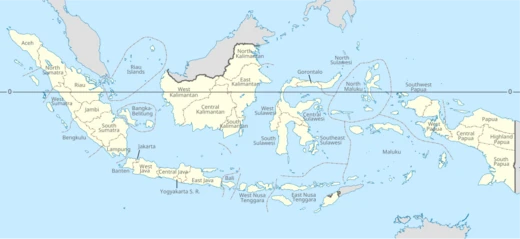
East Java
Province in eastern Java, second-most-populous in Indonesia.

via Wikipedia: Java · see source
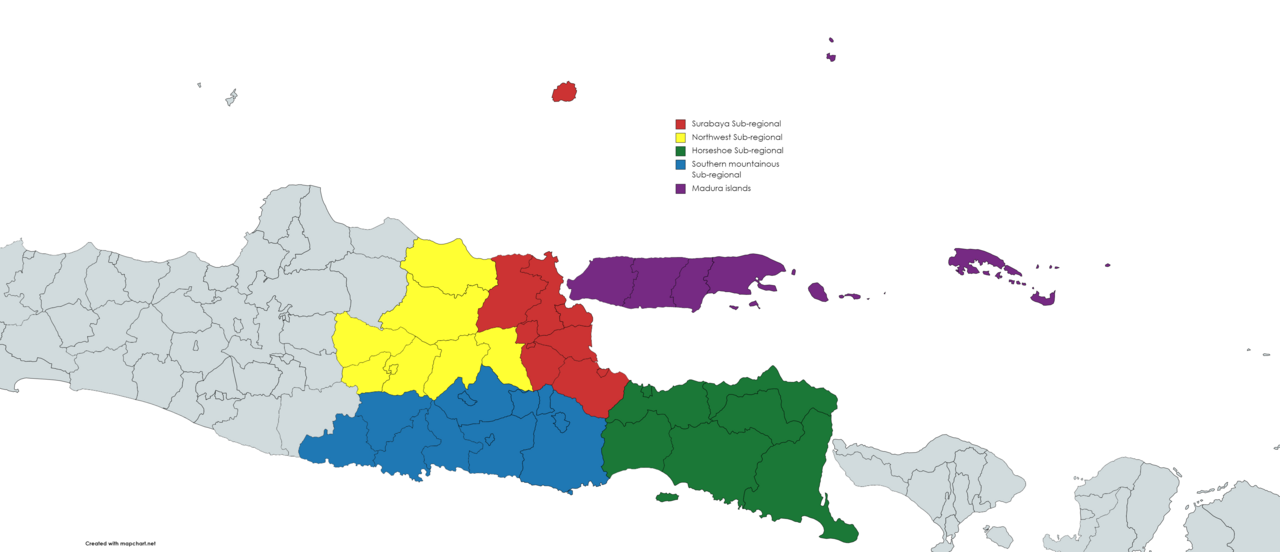
East Java is a province of Indonesia located in the easternmost third of Java island. It includes the island of Madura and smaller offshore islands, with its capital at Surabaya. The province is significant for its prehistoric human fossils, its role in the Hindu-Buddhist kingdoms of Singhasari and Majapahit, and its diverse ethnic and religious composition.
- Capital
- Surabaya
- Major Ethnic Groups
- Javanese, Madurese, Chinese
- Major Religions
- Islam (94%), Christianity, Buddhism, Confucianism, Hinduism
- Official Language
- Indonesian
Lore & Background
East Java has been inhabited since prehistoric times, evidenced by fossils of Homo erectus, popularly known as the 'Java Man', dating back 1.3 million years found along the banks of the Bengawan Solo River. The Tenggerese people, who remain Hindu, live in the Bromo Tengger Semeru National Park.
Reader's Guide
Its prehistoric fossils, including Pithecanthropus erectus, are key to understanding human evolution. The province's diverse ethnic groups—Javanese, Madurese, Chinese—and religious mix, with Islam dominant but Hinduism preserved by the Tenggerese, reflect centuries of cultural exchange. East Java's capital, Surabaya, is a major industrial and business center, and the province offers natural attractions such as the Ijen volcano, Baluran National Park, and Bromo Tengger Semeru National Park.
Did You Know?
- Fossilised remains of Homo erectus, popularly known as the 'Java Man', dating back 1.3 million years were found along the banks of the Bengawan Solo River.
- The Tenggerese people, who remain Hindu, live in the Bromo Tengger Semeru National Park.
- The Suramadu Bridge, the longest in Indonesia, connects Java to Madura.
Volcanic Genesis and the Island's Spine
Java's very existence is a product of deep geological violence. The island was built up over millennia by volcanic eruptions triggered by the subduction of the Australian Plate beneath the Sunda Plate, a process that continues to shape its terrain today. This volcanic heritage is visible in the island's dramatic east–west mountain chain, a spine of thirty-eight peaks that have each, at some point in history, erupted as active volcanoes. In total, one hundred and twelve volcanoes dot the landscape, thirty-five of them still breathing fire and ash. The crown of this range belongs to Mount Semeru, rising to 3,676 metres, while Mount Merapi, at 2,930 metres, holds the distinction of being both Java's and Indonesia's most active volcano. These mountains do more than create spectacle; they carve the interior into a patchwork of relatively isolated basins that have proven extraordinarily fertile for wet-rice cultivation. The volcanic soils also gave birth to Indonesia's coffee tradition, with the first plantings recorded in 1699 and arabica beans still cultivated today on the Ijen Plateau by both smallholder farmers and larger estates.
Cradle of Indonesian Civilization
Few places on Earth have accumulated as much layered history on a single landmass as Java. The island served as the political and spiritual heart of powerful Hindu-Buddhist empires, later became the seat of Islamic sultanates, and then formed the administrative core of the Dutch colonial East Indies. It was also the stage on which Indonesia's independence struggle unfolded during the 1930s and 1940s, cementing Java's role as the nation's political, economic, and cultural engine. Today, the island is home to an estimated 159.2 million people—roughly 56 percent of Indonesia's total population—packed onto just 7 percent of the country's land area. The capital city, Jakarta, sits on the northwestern coast, anchoring this extraordinary density. Java's cultural legacy is further enshrined in four of Indonesia's eight UNESCO World Heritage sites: the Borobudur and Prambanan temple complexes, Ujung Kulon National Park, and the Sangiran Early Man Site. Together, these landmarks trace a continuous thread of human achievement stretching back thousands of years.
A Mosaic of Tongues and Peoples
Despite its relatively compact size, Java is a remarkable mosaic of languages and ethnic identities. Four principal languages are spoken across the island: Javanese, Sundanese, Madurese, and Betawi, with Javanese and Sundanese being the most widely used. The Javanese people are concentrated in the central and eastern regions, while the Sundanese occupy the western parts. The Madurese community, found in the eastern salient, traces its origins to migration from Madura Island, which is administratively part of East Java Province. In Jakarta, the Betawi represent a distinctive hybrid identity, blending elements from various Indonesian ethnic groups. Most residents are bilingual, with Indonesian serving as either a first or second language alongside their local tongue. Religiously, the majority of Javanese residents are Muslim, yet the population encompasses a broad spectrum of faiths, ethnicities, and cultural traditions. Administratively, the island is divided into four provinces—Banten, West Java, Central Java, and East Java—plus two special regions, Jakarta and Yogyakarta.
A Name Traced Across Millennia and Civilizations
The origins of the name "Java" remain debated, though the most widely accepted theory links it to jawa, the foxtail millet plant, rooted in the Proto-Austronesian *zawa. The historian Michael Laffan proposed an older form *yaba based on sound-change directionality, while the early nineteenth-century British scholar Stamford Raffles floated the Malay word jauh, meaning "beyond" or "distant." Other suggestions, such as *awa or *yawa meaning "home," have not gained broad scholarly support. What is remarkable is how early the toponym appears in foreign records. Sanskrit texts like the Ramayana call it Yavadvīpa; the ancient Tamil epic Maṇimēkalai references it as Shavakam; and the Pāli scripture Mahāniddesa, likely predating the first century BCE, mentions it as a destination reachable by boat. The Greek geographer Ptolemy recorded Iabadiu in his second-century Geographia. Chinese sources evolved their rendering over centuries, from Yèdiào and Yépótí in the early first millennium to Zhǎowā from the Yuan Dynasty onward. In the later Middle Ages, Arabic writers used the broad term al-Zabaj, which influenced how late medieval Europeans referred to the Indonesian archipelago.
Gallery
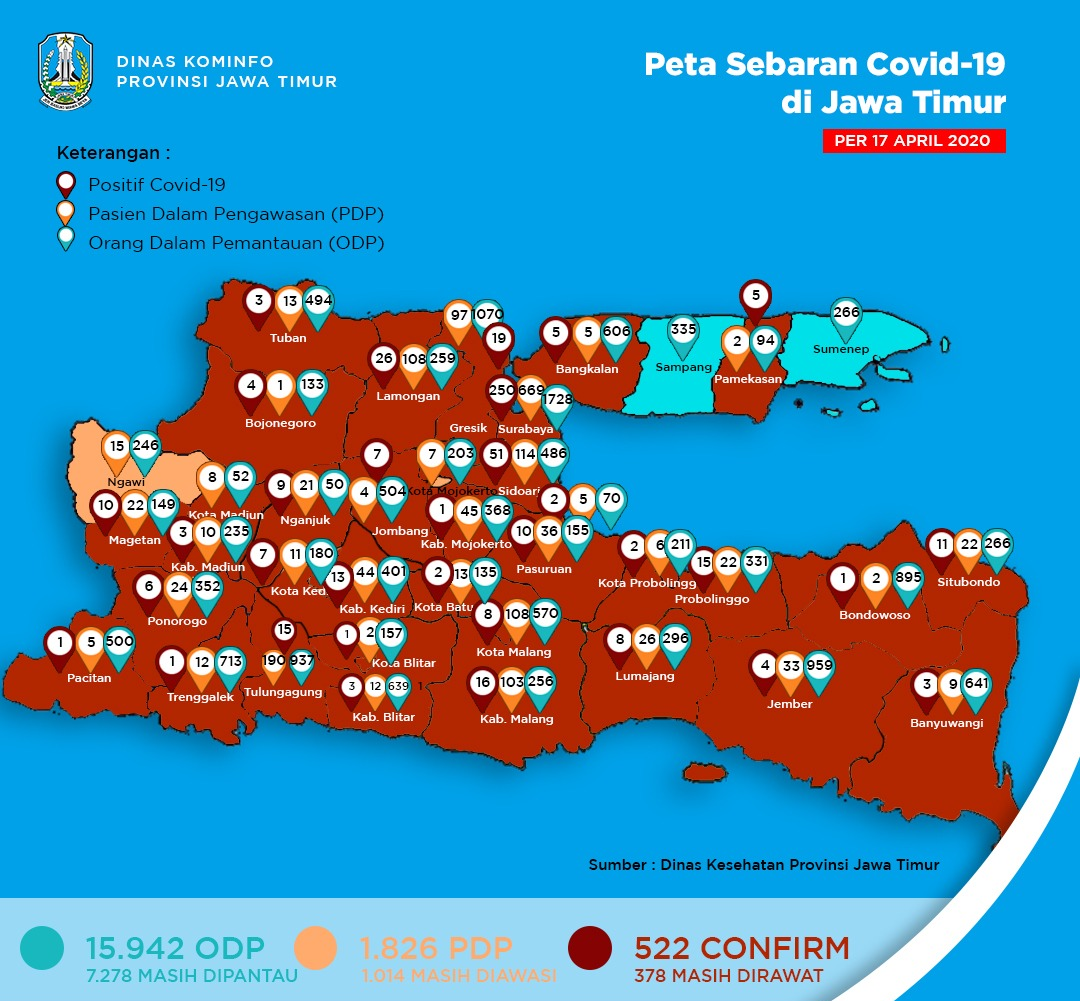
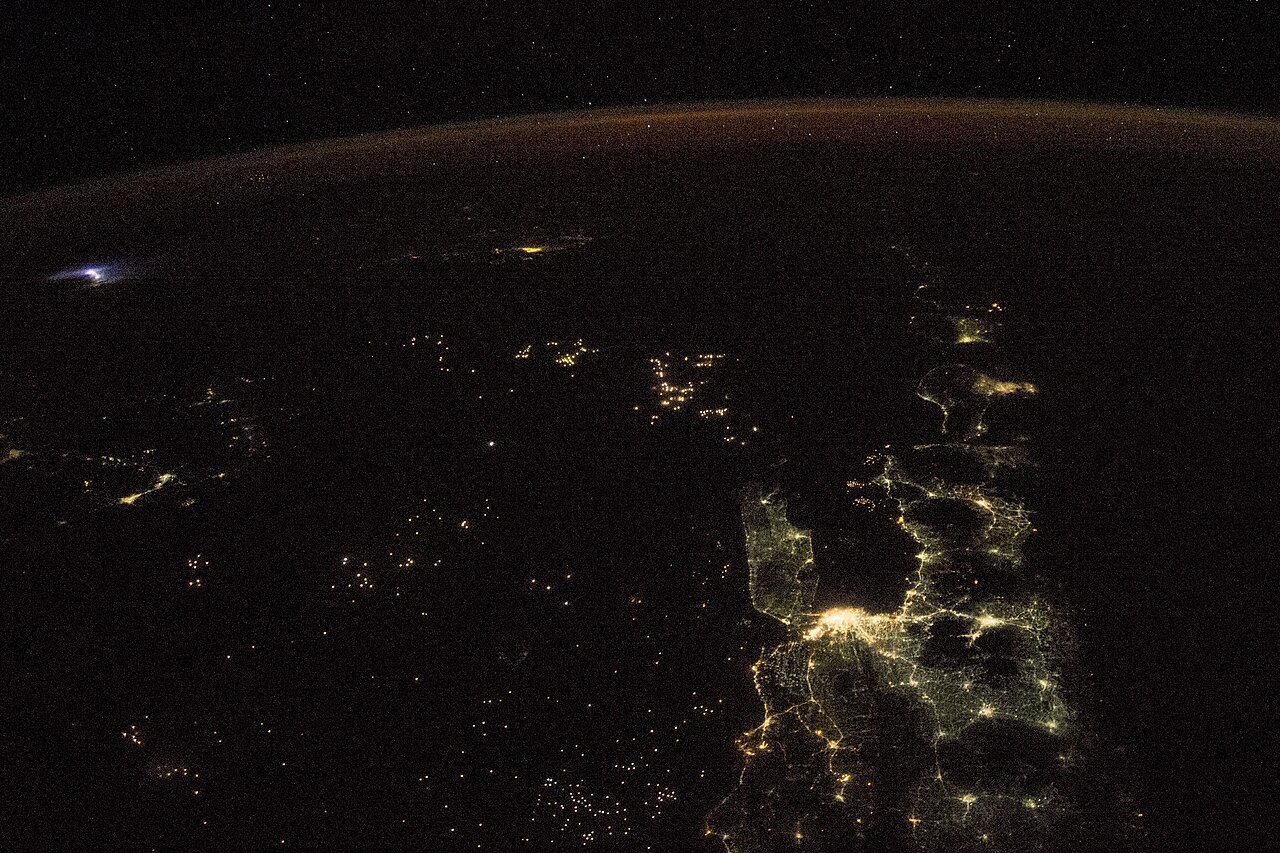
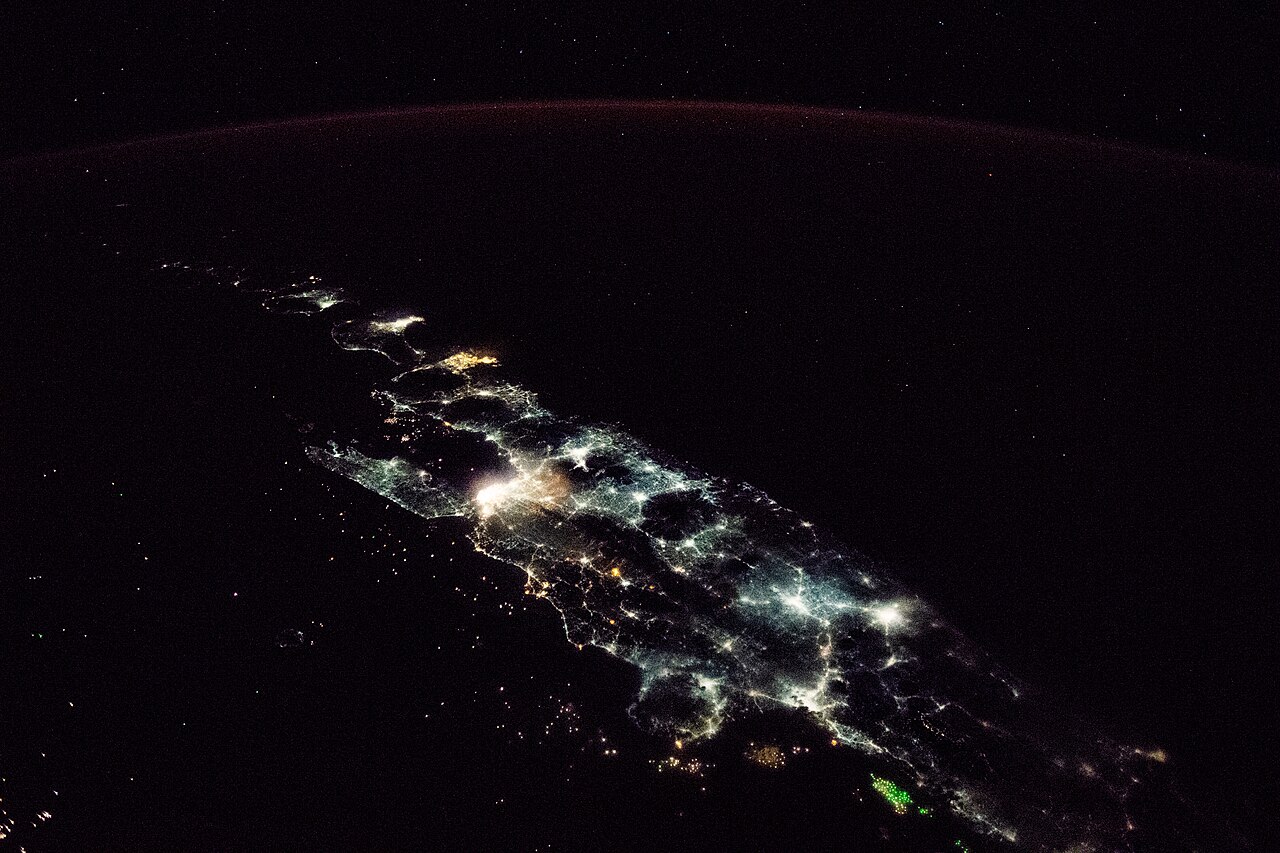
Frequently Asked Questions
What is East Java?
East Java is a province occupying the easternmost third of Java island in Indonesia. Its territory also extends to Madura, the Kangean islands, and several smaller island groups.
What is East Java's capital and what role does it play?
Surabaya serves as the provincial capital and is Indonesia's second-largest city. It functions as a major industrial and business hub for the region.
How many people live in East Java?
The 2020 census recorded roughly 40.7 million residents, and mid-2025 estimates push the figure past 42 million. That makes it the second-most-populous province in the country.
Why is East Java historically significant?
The region was the heartland of the powerful Hindu-Buddhist kingdoms of Singhasari and Majapahit. It has also produced important prehistoric human fossils, giving it a long archaeological record.
What ethnic and religious groups make up East Java's population?
Javanese and Madurese communities form the bulk of the population, with a notable Chinese-Indonesian presence as well. Islam is followed by about 94% of residents, while smaller Christian, Buddhist, Confucian, and Hindu communities also live in the province.
More in Provinces Of Indonesia 1-24
Elsewhere in the Provinces Of Indonesia universe
Spotted an error? Know more?
This is a living reference — every entry is fact-audited, and reader corrections feed straight into our audit queue. Suggest an edit · See this site's audit record