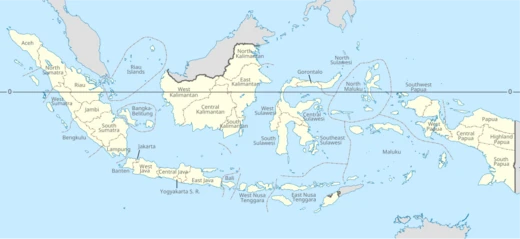
Banten
Westernmost province of Java, Indonesia, with a rich sultanate history.

Geospatial Information Agency of Indonesia · Public domain
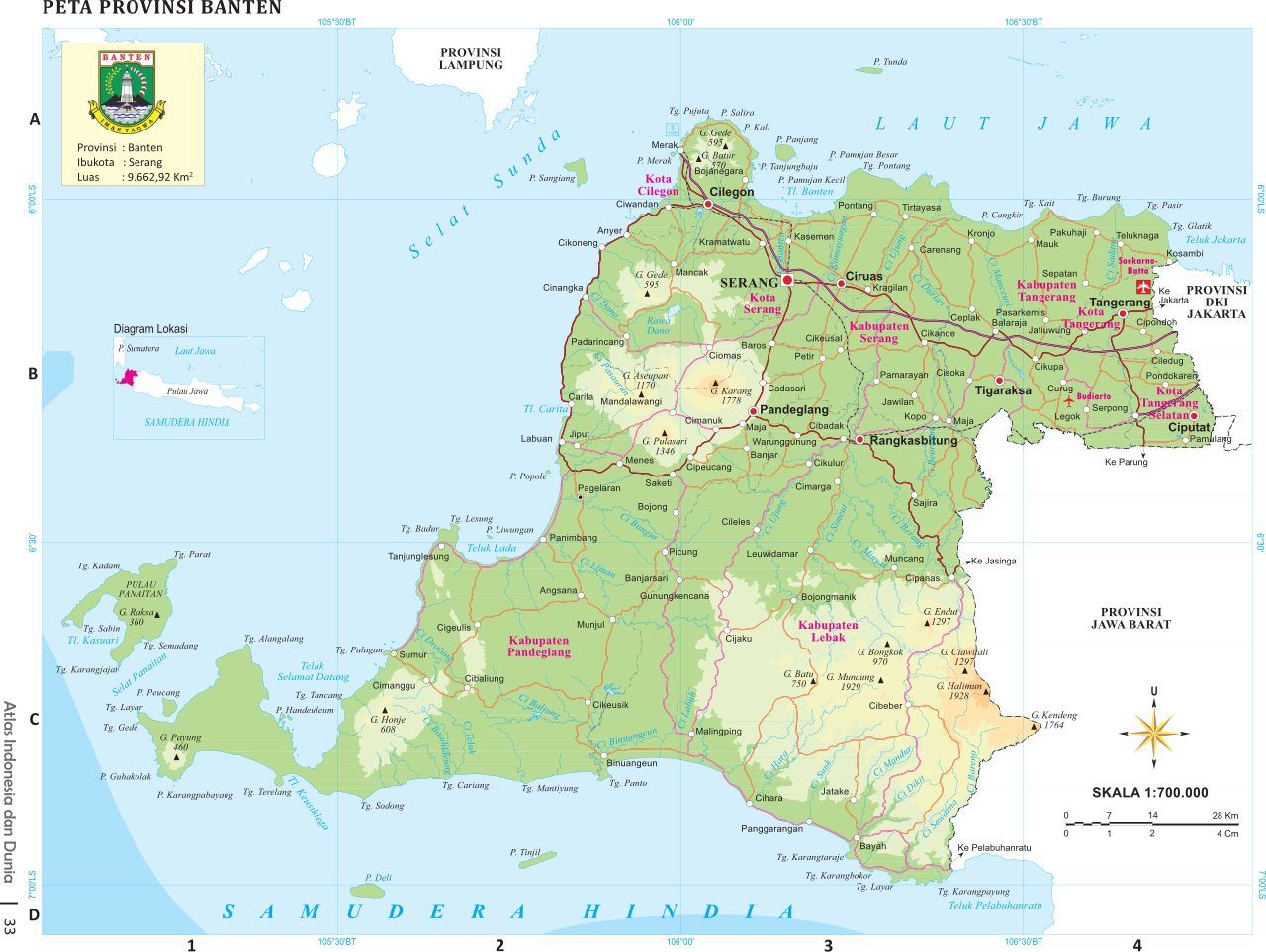
Banten is the westernmost province on the island of Java, Indonesia, with Serang as its capital and Tangerang as its largest city.
- Capital
- Serang
- Largest City
- Tangerang
- Population (2020 census)
- over 11.9 million
- Major Historical Polity
- Banten Sultanate
Lore & Background
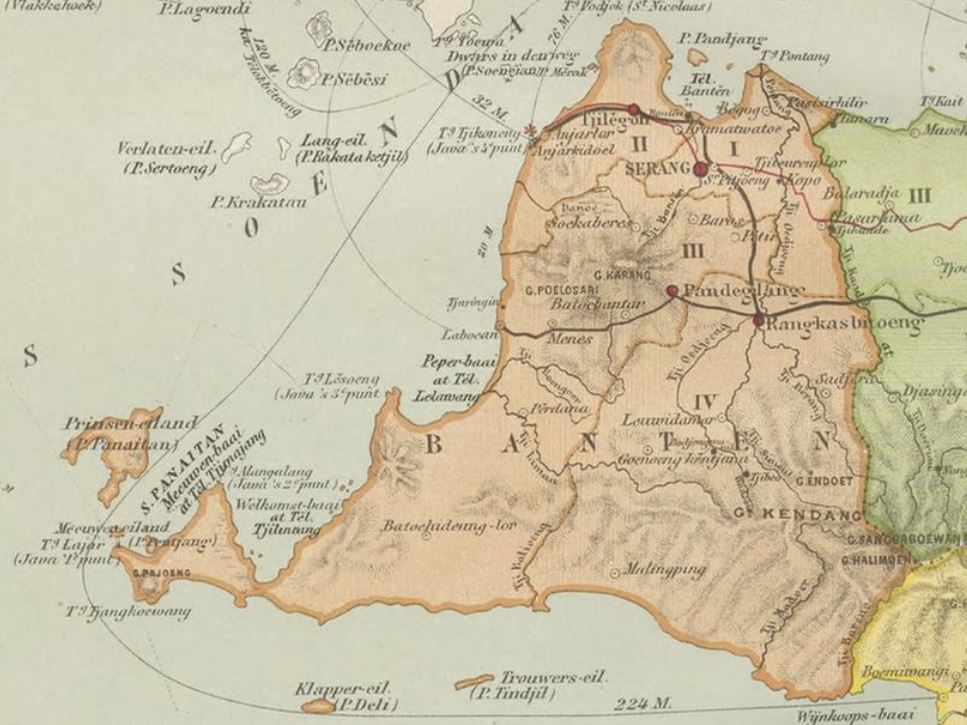
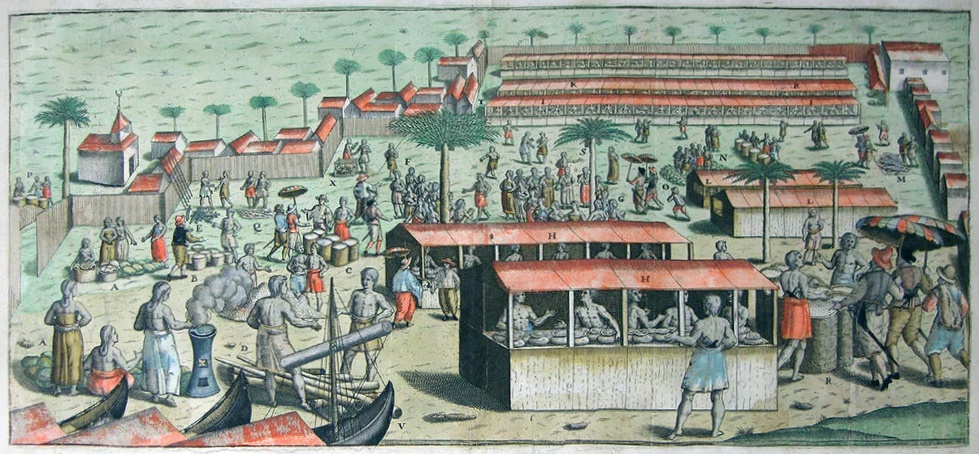
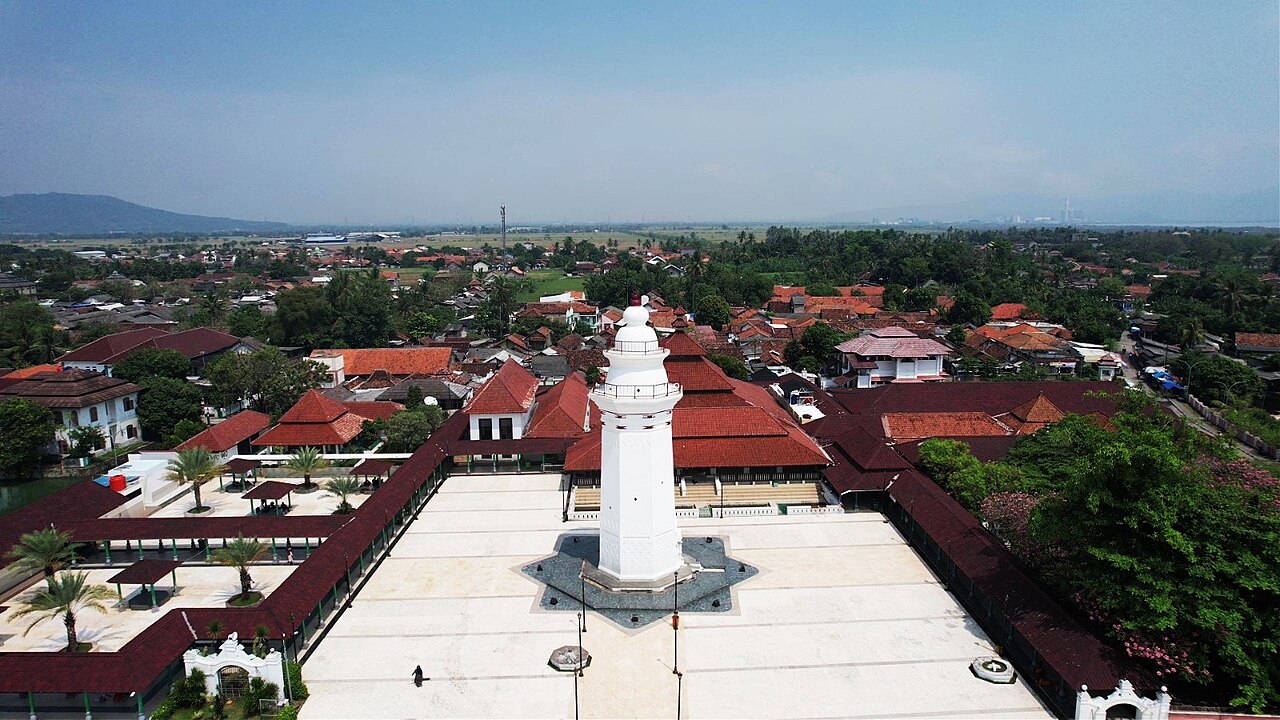
Present-day Banten was part of the Sundanese Tarumanagara kingdom from the fourth to the seventh centuries AD, then controlled by Hindu-Buddhist kingdoms such as Srivijaya and the Sunda Kingdom. Islam spread in the region during the 15th century, and by the late 16th century it had become dominant with the establishment of the Banten Sultanate. European traders—Portuguese, British, and Dutch—arrived in the region, and the Dutch East India Company (VOC) eventually controlled the economy, weakening the sultanate.
Reader's Guide
Banten's significance lies in its historical role as a powerful maritime sultanate and a key trading hub in Southeast Asia, rivaling Malacca and Makassar. The sultanate's pepper monopoly in Lampung and its multi-ethnic trade networks connected it to regions from Persia to Japan. The legacy of Sultan Ageng Tirtayasa's resistance against the VOC and the subsequent Dutch absorption mark a pivotal chapter in Indonesian colonial history. Today, Banten is a rapidly growing province, with its northern areas near Jakarta experiencing urbanization while the southern half retains a more traditional character. The province's diverse etymology—from 'struck down by diamonds' to 'rebuttal'—underscores its cultural and historical complexity.
Did You Know?
- The name 'Banten' may originate from the Sundanese phrase 'katiban inten', meaning 'struck down by diamonds', referring to the spread of Islam.
Tangerang's Distinct Role in Banten's Urban Structure
Tangerang holds a distinctive position within Banten's administrative geography. Unlike the majority of Indonesian provinces, where the most populous settlement also serves as the provincial seat, Banten breaks this pattern. Tangerang is the province's largest city by population, yet it does not carry the title of provincial capital. This places Banten among a small group of six provinces—alongside West Java (Bekasi), Riau Islands (Batam), South Kalimantan (Banjarmasin), North Kalimantan (Tarakan), and North Maluku (Ternate)—where the urban center of greatest size is distinct from the seat of provincial government. This separation between demographic weight and administrative authority creates a particular dynamic in how the province organizes its urban governance, with two different cities claiming different forms of prominence within the same regional framework.
Tangerang in the Jakarta Metropolitan Orbit
Tangerang's urban significance cannot be understood in isolation from Jakarta's gravitational pull. The city is one of five satellite settlements surrounding Indonesia's capital that have each surpassed the one-million-population threshold. Together with Bekasi, Depok, South Tangerang, and Bogor, Tangerang forms part of a densely clustered urban ring that orbits the nation's only megacity. Jakarta itself, with 10.70 million residents, stands nearly four times larger than Indonesia's second city, Surabaya, and is subdivided into five administrative cities plus an administrative regency—none of which possess self-governance through a municipal council or independent budget. Tangerang's growth into the million-plus category reflects the broader pattern of urbanization radiating outward from Jakarta, making the Banten province a critical component of the country's most concentrated metropolitan zone.
Banten in Indonesia's Provincial City Hierarchy
Within the broader architecture of Indonesian urban governance, Banten occupies a notable position. The country maintains 93 cities classified as kota, one provincial-level capital city (Nusantara), and one provincial-level special city (the Special Capital Region of Jakarta). Most provinces follow a straightforward pattern: their largest city by population doubles as their administrative capital. Banten, however, is one of only six provinces that deviate from this norm, with Tangerang serving as the demographic heavyweight while a different settlement holds the capital designation. This distinguishes Banten's urban profile from provinces like Sumatra, where Medan anchors both roles, or Sulawesi, where Makassar fulfills both functions. The provincial landscape thus reveals a patchwork of arrangements, and Banten's split between its largest city and its capital represents a meaningful structural variation in how Indonesia organizes subnational urban authority.
Demographic Weight and National Context
The population figures that define Tangerang's standing within Banten also place it within a nationally significant group. As of the 2020 census, fourteen Indonesian cities exceeded one million residents, collectively housing approximately 32.6 million people—roughly 12.07 percent of the nation's 270.2 million total population. Tangerang belongs to this elite tier of urban centers. The data underpinning these rankings comes from Statistics Indonesia (BPS), drawing on both the 2020 census and more recent official estimates as of mid-2024. For perspective on growth dynamics, Jayapura in Western New Guinea recorded the most rapid expansion over the 2010-to-2020 decade, swelling by 70 percent. Tangerang's inclusion among the fourteen million-plus cities underscores Banten's role as a major node in Indonesia's urban system, even as the province's administrative structure differs from the norm seen in most other regions.
Gallery

Frequently Asked Questions
What are Banten's capital and largest city?
Serang serves as the provincial capital, while Tangerang is the most populous city in the province. Both sit in the densely settled northern half of Banten, which has seen the fastest urban growth.
Why is Banten historically significant?
Banten was the seat of the Banten Sultanate, one of the most powerful Islamic polities in pre-colonial Java. That legacy of sultanate-era culture and trade still shapes the region's identity today.
More in Provinces Of Indonesia 1-24
Elsewhere in the Provinces Of Indonesia universe
Spotted an error? Know more?
This is a living reference — every entry is fact-audited, and reader corrections feed straight into our audit queue. Suggest an edit · See this site's audit record