East Nusa Tenggara
Southernmost Indonesian province with rich culture and biodiversity.

via Wikipedia: East Nusa Tenggara · see source
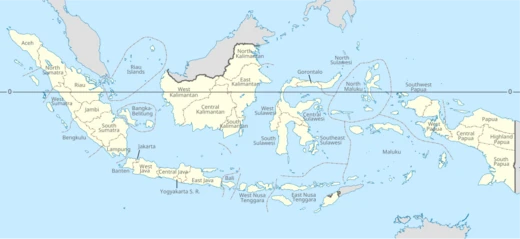
East Nusa Tenggara (Indonesian: Nusa Tenggara Timur; NTT) is the southernmost province of Indonesia, comprising the eastern portion of the Lesser Sunda Islands. It faces the Indian Ocean in the south and the Flores Sea in the north, with a total land area of 46,378.11 km². The province consists of some 653 islands, with the largest being Sumba (10,899.41 km²), Flores (15,482.42 km²), and the western part of Timor (14,079.36 km²); the latter shares a land border with the separate nation of East Timor. The capital and largest city is Kupang. Archaeological research shows that Liang Bua cave has been inhabited by humans since about 190,000 years ago, including the early human species *Homo floresiensis*.
- capital
- Kupang
- number_of_islands
- 653
- largest_islands
- Sumba, Flores, western part of Timor
- highest_point
- Mount Mutis (2,427 m)
- predominant_religion
- Roman Catholicism
Verified Timeline
Lore & Background
East Nusa Tenggara was established as a province in 1958 by Indonesian law No. 64/1958, following the dissolution of the United States of Indonesia into a unitary state. The province originally comprised twelve regencies, but subsequent subdivisions, especially after the fall of the Suharto regime in 1998, increased the number to twenty-one regencies plus the city of Kupang by early 2013. Archaeological research at Liang Bua cave indicates human habitation since about 190,000 years ago, including the early human species *Homo floresiensis*. The province's geography includes about 566 islands, with the largest being Flores, Sumba, and the western part of Timor, which shares a land border with East Timor. The highest point is Mount Mutis at 2,427 meters above sea level. The population was 5,325,566 in the 2020 census, with Kupang City as the most populous urban area. The population is predominantly Christian, with a strong Catholic majority in Flores, and includes significant Muslim, Hindu, and local belief minorities.
Reader's Guide
East Nusa Tenggara holds significance as a province that preserves a unique blend of natural and cultural heritage. Its marine ecosystem is exceptionally rich, making it a popular destination for divers, and its terrestrial parks, such as Komodo National Park and Lake Kelimutu, are internationally recognized. The province's history of missionary activity has resulted in it being one of only two Indonesian provinces where Roman Catholicism is the predominant religion, alongside South Papua. The administrative evolution of East Nusa Tenggara, from twelve regencies in 1958 to twenty-one regencies and one city by 2013, reflects broader Indonesian trends of regional autonomy and *pemekaran* (subdivision) after the fall of Suharto. The presence of *Homo floresiensis* at Liang Bua cave adds significant archaeological importance, highlighting the region's role in early human history. The province's diverse ethnic groups and languages, along with traditions like ikat weaving and the Pasola ceremony in Sumba, contribute to its cultural richness and distinct identity within Indonesia.
Did You Know?
- Liang Bua cave in East Nusa Tenggara has been inhabited by humans since about 190,000 years ago, including the early human species *Homo floresiensis*.
- East Nusa Tenggara is one of only two Indonesian provinces where Roman Catholicism is the predominant religion, the other being South Papua.
- The province consists of about 566 islands, but the source states there are some 653 islands (excluding smaller unnamed ones).
- Rote Island is the southernmost part of Indonesian territory, and the Australian territory of the Ashmore and Cartier Islands, 170 km due south, is actually much closer to Rote than to any point on the Australian mainland.
- The highest point in the province is Mount Mutis in the South Central Timor Regency, at 2,427 metres above sea level.
Frequently Asked Questions
What is East Nusa Tenggara (NTT) and where is it located?
NTT is Indonesia's southernmost province, made up of 653 islands in the eastern stretch of the Lesser Sunda chain. Its territory spans Sumba, Flores, and the western half of Timor, with Kupang serving as the provincial capital.
What is the highest point in East Nusa Tenggara?
Mount Mutis, rising to 2,427 metres, is the tallest peak in the province. It stands out as the province's defining natural landmark across its roughly 46,378 km² of land.
Why is East Nusa Tenggara famous for its culture?
The province is home to a remarkable patchwork of tribal groups, languages, and living traditions. Iconic examples include the hand-woven ikat textiles and the dramatic Pasola horse-riding ceremony, both of which draw visitors and scholars alike.
What role does East Nusa Tenggara play in Indonesia's biodiversity?
NTT hosts Komodo National Park, the protected habitat of the famous Komodo dragon, making it a key destination for wildlife tourism. Its island ecosystems and marine environments add to Indonesia's overall ecological richness.
How many people live in East Nusa Tenggara and what is its population like?
The province is home to roughly 5.74 million residents as of the mid-2025 estimate. Despite being one of Indonesia's larger provinces by area, its population is spread thinly across hundreds of islands, giving each community a distinct local identity.
More in Provinces Of Indonesia 1-24
Elsewhere in the Provinces Of Indonesia universe
Spotted an error? Know more?
This is a living reference — every entry is fact-audited, and reader corrections feed straight into our audit queue. Suggest an edit · See this site's audit record